 Szarik
A robot acquires a software stack.
MuJoCo simulation, inverse kinematics and the repository join an existing mechanical project. The code has to explain a machine that already exists—and the documents have to keep up with it.
Designing parts for this robot.
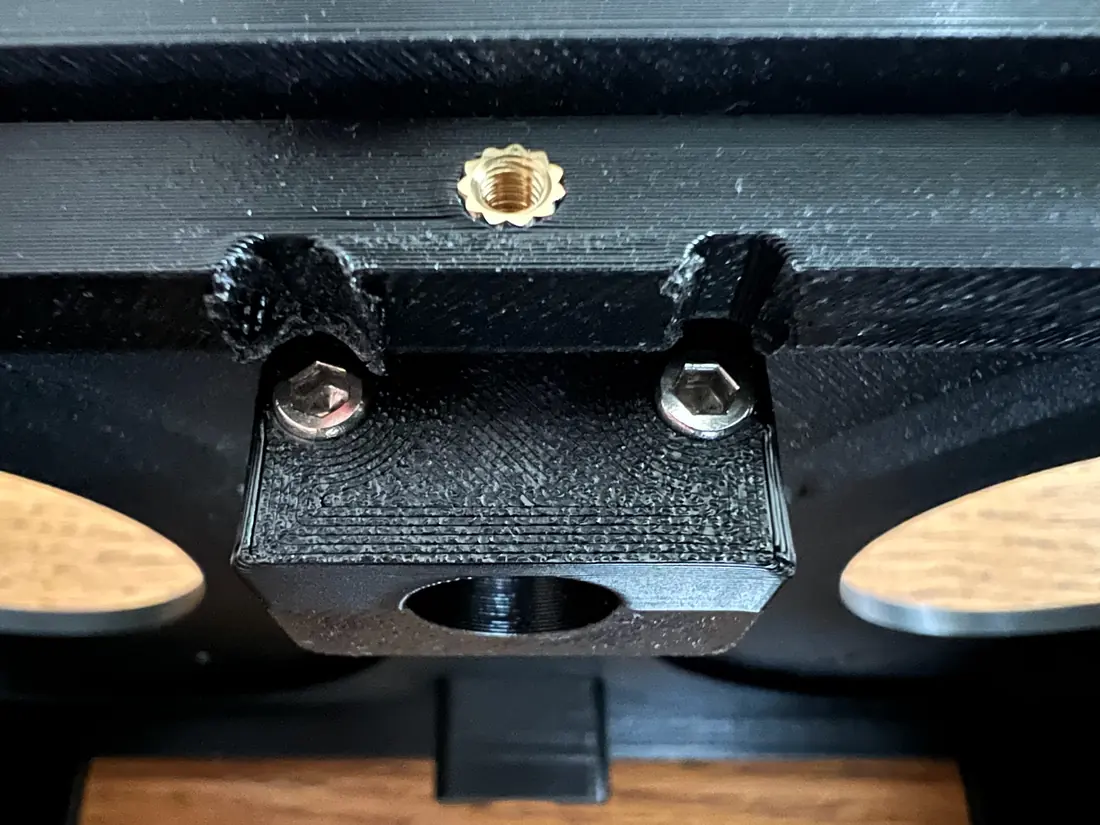
A printed belt tensioner, brass inserts and screws. By July, the project was drawing its own parts rather than only printing existing designs.
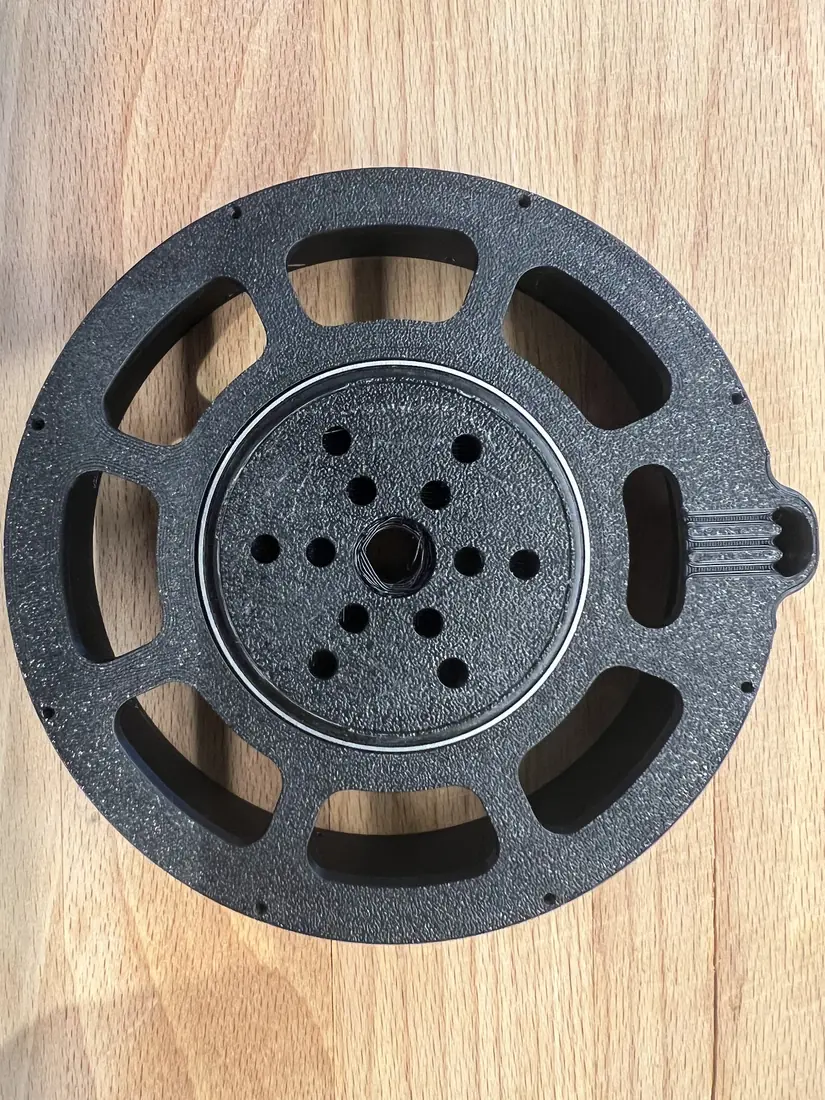
The second actuator.
Resistance measured 0.6 ohms across every pair of phase leads. The rotor still rubbed slightly. Consistent electrical readings did not settle a mechanical problem.
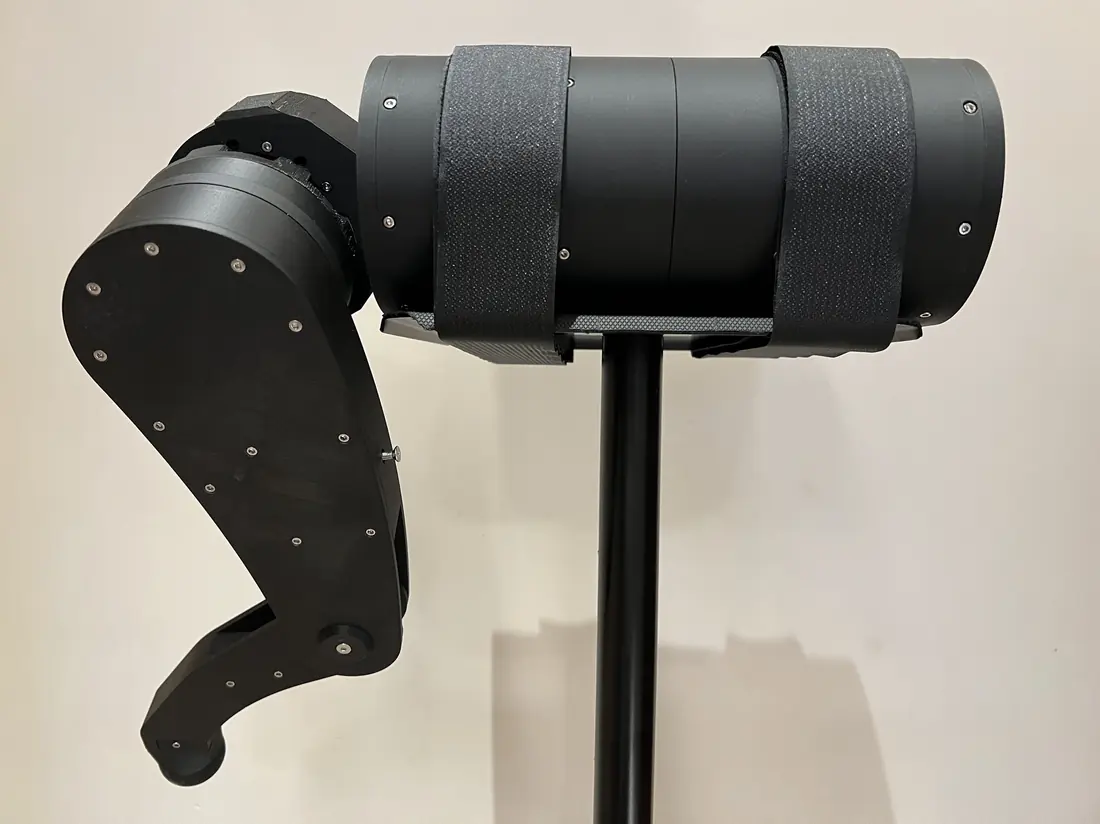
One leg, safely on a stand.
Three actuators make one leg. The first leg was dry-assembled to find the parts that did not fit, then put on a stand with the feet clear of the floor.
It spins.
The wound stator is seated in the printed housing. The prototype turns under power. Forty-two rotor magnets had been fitted by hand; one chipped going in.
A motor begins with copper.
The first stator is fully wound. Its 36 slots and 42 magnetic poles use a two-layer wye winding. A printed holder makes it possible to wind six wires together.
A different brain.
The original Jetson stopped booting after a camera-port configuration change. A Raspberry Pi 5 arrived in January; the next day it was running Ubuntu Server and exchanging ROS 2 messages with a laptop.
The project gets a name.
Szarik is named after the German shepherd from the Polish television series Czterej pancerni i pies. Wire, bearings, stators and steel magnet holders begin arriving. Three people are involved, and the initial target is enough actuators for one leg.
Selected entries from the project’s build record, covering December 2025 through September 2026. This is a historical diary, not a claim about the robot’s current completion or performance.